 SUN2X-SET
 SUNER-C
How can we achieve the EU's goal of becoming the first climate-neutral continent by 2050? SUNER-C is the EU-funded project (4M € over 3 years) coordination and support action on the next generation of energy carriers to replace fossil-fuels. 30 different EU partners gathered together to work on building an ecosystem of companies, researchers, societal actors and policymakers, to accelerate the transition of technologies for the generation of solar fuels and chemicals, from the laboratory to large-scale industrial applications.
The European Union is clear to stay on a steady path to climate neutrality through its plan against greenhouse emissions, the 'Fit for 55' package, with the EU Green Deal as a blueprint. Renewable energy based on photovoltaics and wind energy needs to be supplemented with energy carriers to supply fuels to sectors and processes difficult to electrify and to create non-fossil carbon feedstock for the chemical industry.
SUNER-C is the recent Coordination and Support Action (CSA) powered by SUNERGY Community and funded by the EU programme Horizon Europe (Grant Agreement nr. 101058481). CSAs are projects that convey actions such as dissemination, communication, networking, support services, policy dialogues, studies, strategic plannings, among others.
SUNER-C project, entitled "SUNERGY Community and eco-system for accelerating the development of solar fuels and chemicals", aims to develop and expand the innovation ecosystem for renewable fuels and base chemicals, uniting science, business, societal and other relevant stakeholders.
The sustainable manufacturing of solar fuels and chemicals at the needed scale using a circular economy approach is in sight, but not yet reached without a concerted action between academia, industry, governments, and societal stakeholders. SUNER-C aims at fulfilling this gap by laying the foundation stone for a Large-Scale Research and Innovation (LSRI) initiative at the European level.
Objectives
The overarching objective of the SUNER-C CSA is to aggregate fragmented knowledge and develop the framework conditions to overcome scientific, technological, organizational and socioeconomic challenges to accelerate innovation and enable the required transition of technologies for solar fuels and chemicals from laboratory or demonstrator level to large-scale industrial and broad societal applications.
Work Packages
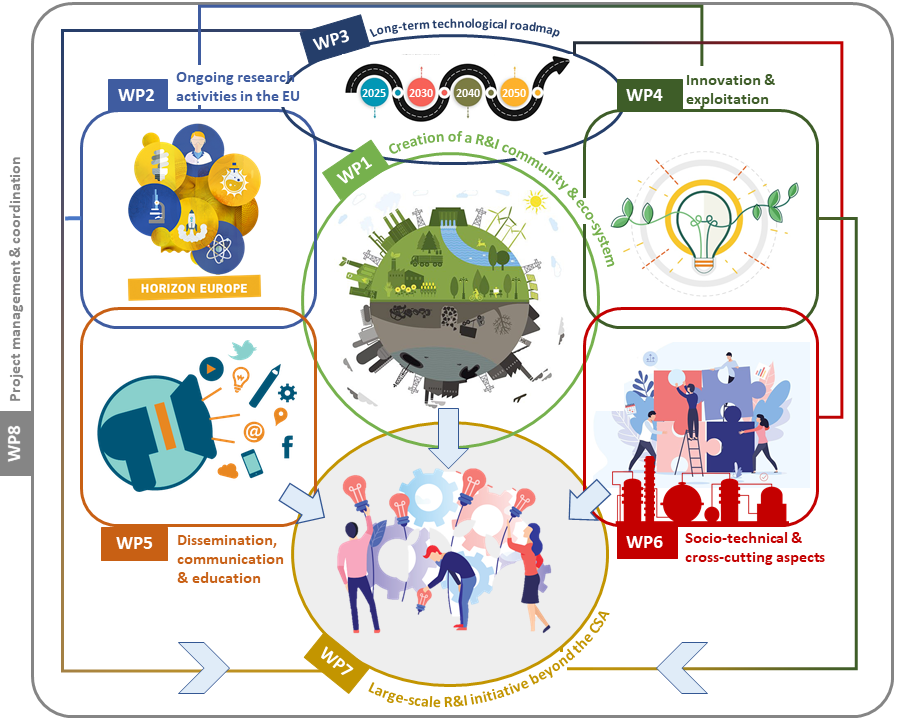
SUNER-C consortium is formed by 30 industry, academic, societal and network organizations in 12 countries, working across eight Work Packages. WP1 creates an inclusive innovation eco-system; WPs 2–6 foster project synergies (WP2), elaborate a roadmap and blueprint (WP3), develop an exploitation and innovation strategy (WP4), implement a communication and dissemination plan (WP5), and address socio-technical and cross-cutting aspects (WP6). WP7 prepares the LSRI initiative, and WP8 coordinates the CSA.
Expected Impacts
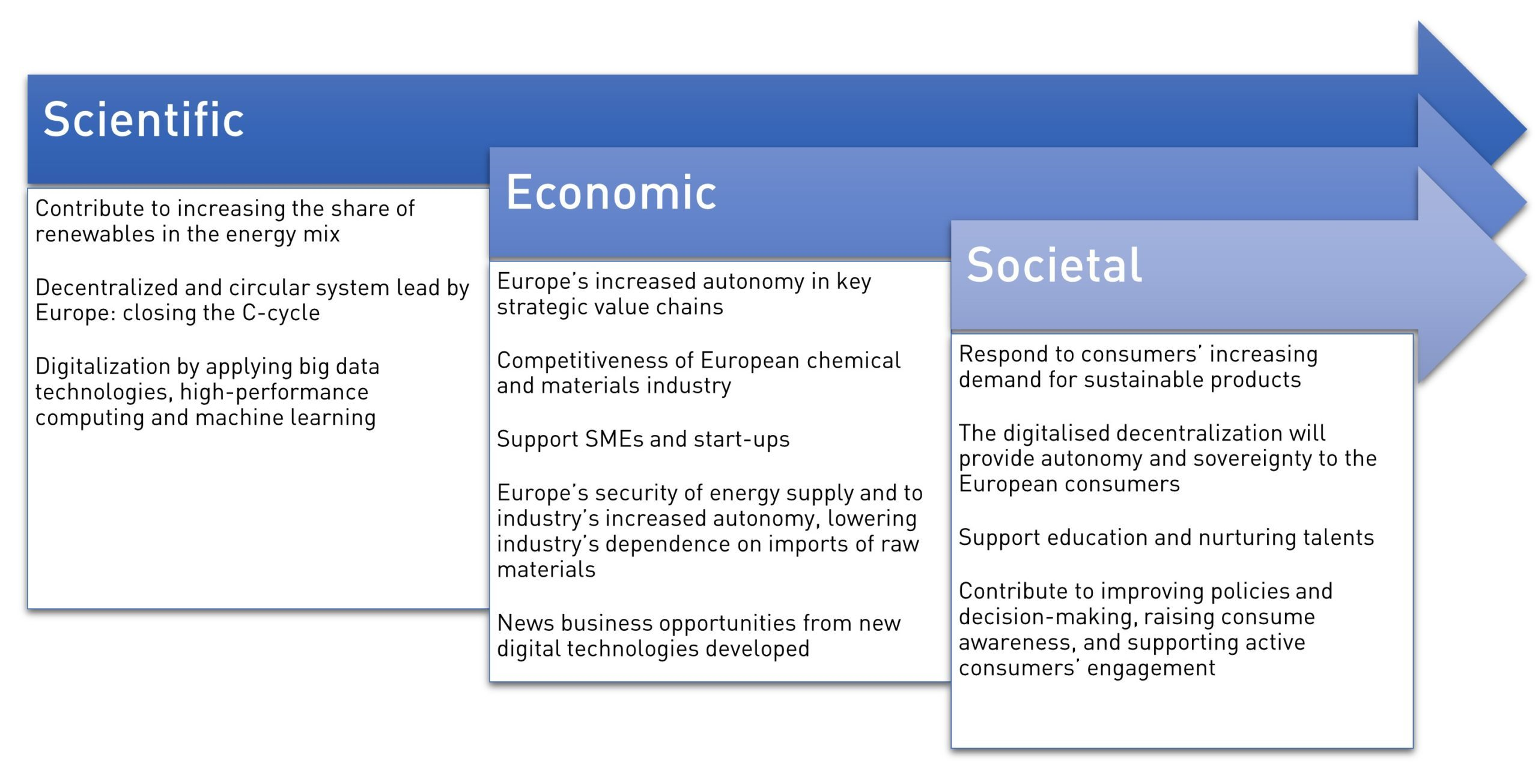
SUNER-C aimed at catalysing the development and integration of solar fuels and chemicals at a reduced cost to substitute fossil-based ones, developing a European ecosystem to speed up technology development, ultimately preparing a large-scale R&I initiative within the EU funding landscape.
Outcomes
Do you want to know about the achievements reached so far?